Dr. Azeez Fashina, a third-year PhD student who works in the lab of Dr. Robert Cornell, has been named as the School of Dentistry’s 2026-2027 Magnuson Scholar.
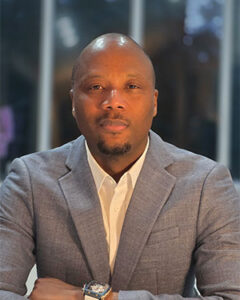
The UW’s Magnuson Scholar Program recognizes one scholar from each of the university’s six health sciences schools — Dentistry, Medicine, Nursing, Pharmacy, Public Health and Social Work — plus one additional scholar from one of the schools.
“Being selected by the School of Dentistry as one of the Magnuson Scholars is a tremendous honor and a meaningful recognition of both my academic journey and my commitment to dentistry,” said Dr. Fashina. “To me, it represents not only validation of the work I have done so far, but also encouragement to continue growing as a scholar, clinician, and future leader in the field.
“I see this recognition as a responsibility as well as a privilege. It motivates me to keep striving for excellence, contribute to the School of Dentistry community, and use the opportunities I receive to make a positive impact on patients and the profession.”
Dr. Fashina is an oral and maxillofacial surgeon whose oral health journey has taken him from clinical practice in Nigeria to now doctoral training at the School of Dentistry. Having spent years in operating rooms and clinics, caring for patients with craniofacial anomalies, he has often served as the first clinician to counsel families after a devastating diagnosis, guiding them through multiple reconstructive procedures.
“Early in my career,” explains Azeez, “I became fascinated by the genetic basis of orofacial clefts and the tremendous potential for discovery in this field. A Fogarty/NIH seed grant exploring genetic links between cancers and orofacial clefting strengthened my foundation in translational genetics and confirmed my commitment to a research-intensive career.”
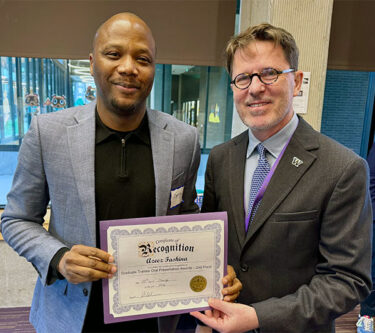
Dr. Fashina has been heavily involved in research since coming to the UW School of Dentistry. He’s participated in each of the previous three UWSOD Research Days, taking home third place in the Graduate Trainee competition in 2024 and second place in 2026.
His career objective is to become an independent surgeon–scientist at the forefront of craniofacial genetics and anomaly research, leading a program that improves the lives of children and adults affected by conditions such as cleft lip and palate.
“This scholarship will help me develop as an oral health professional by allowing me to focus more fully on my PhD training and overall professional growth without the added burden of financial stress,” said Dr. Fashina. “It will provide meaningful support as I continue to build the knowledge and perspective needed to make a meaningful impact on management of craniofacial anomalies for years to come.”
“In the long term,” he furthered, “It will help me accomplish my professional goals by assisting me to advance dentistry through research and scholarship and eventually grow into a clinician and leader dedicated to improving oral health outcomes and patient care.”
Each Health Sciences School nominates their specific scholar on the basis of outstanding academic performance and potential contributions to research in the health sciences. All Magnuson Scholars help continue the legacy of the late Senator Warren G. Magnuson and his remarkable commitment to improving the nation’s health through biomedical research, education, and responsive, sustainable healthcare discoveries.
For more on Dr. Fashina and on the Magnuson Scholar Program, visit the 2026-2027 Magnuson Scholars webpage.