 Wednesday, Feb. 11, is the International Day of Women and Girls in Science. Established by the United Nations, the day of celebration is meant to recognize that full and equal access to and participation in science, technology and innovation for women and girls of all ages is imperative for achieving gender equality and the empowerment of women and girls.
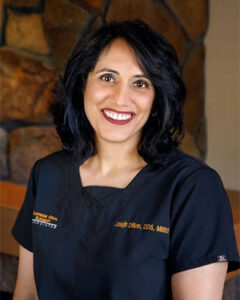
To commemorate the day of celebration, the UW School of Dentistry met with two female scientists who are esteemed global researchers and clinicians in their respective fields: Dr. Jasjit Dillon and Dr. Ana Lucia Seminario.
Dr. Dillon serves as the Program Director of the UW Department of Oral and Maxillofacial Surgery and Chief of Harborview Medical Center’s Oral and Maxillofacial Surgery Department. She has an internationally based background, having received dental degrees from both the University of Newcastle Upon Tyne Dental School and the University of California, San Francisco, and has garnered experience and training in five different countries. Dr. Dillon currently serves as the president of the American Academy of Craniomaxillofacial Surgeons.
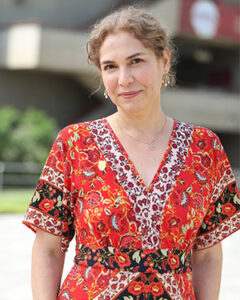
Dr. Seminario is the Director of the DeRouen Center for Global Oral Health and a Professor in the UW Department of Pediatric Dentistry. As part of the DeRouen Center’s global collaboration efforts, she works closely with oral health partners in Kenya, Thailand and Peru, where she received her DDS degree from the Cayetano Heredia University. Dr. Seminario is a Diplomate of the American Board of Pediatric Dentistry and serves on the Council on Clinical Affairs at the American Academy of Pediatric Dentistry.
The School of Dentistry asked Drs. Dillon and Seminario a series of questions about their recent endeavors and experiences in their careers.
Q. What project or type of work have you put the most time into over this past year?
Dr. Jasjit Dillon: We had our CODA accreditation for our department, which is on a five-year cycle (the School of Dentistry is on a seven-year cycle). With that came hours and hours of work to make sure we had everything in order.
But as program director, I’m 100% responsible for the success or failure of the accreditation on behalf of everyone. So that came with a lot of pressure, but we had a successful accreditation with no recommendations, which was a relief.
Dr. Ana Lucia Seminario: Much of my time this year has gone into laying the groundwork—processes, relationships, and trust—to put [the DeRouen Center’s] work on a clear path toward becoming a WHO Collaborating Center in oral health. It’s mostly behind-the-scenes work, but deeply meaningful to me because it connects science, education, and policy with real global impact.
Q. What has been the most rewarding work you have done over the past five years?
Dillon: How our service has grown at Harborview. We’re providing a tremendous amount of care to patients who otherwise wouldn’t have had anywhere to go. I’m extremely proud of the team that we’ve built there, our staff, my partners, how everybody’s very engaged in patient care and the patient-comes-first model, working on making sure we provide a really great service; all of that has taken a long time to build.
And that extends to my residents. They’ve embraced our culture of everybody working together as a team, everybody succeeding as a team, and they work really hard. They always call me surgery mom. I’ll have some cards that say “mom” on them that they give me when they graduate.
Seminario: Leading NIH-funded projects that grew out of years of collaboration and persistence. Seeing these projects make a real difference in low- and middle-income countries—and supporting young and mid-career researchers, especially women and those from underrepresented backgrounds—has been incredibly rewarding.
Q. If you met a young girl interested in pursuing a career in science, what advice would you give her, or to any child?
Dillon: The number one thing for me, the reason that we still have smiles on our faces when we’re working really late at night, is because we love what we do. That’s what my advice would be: to do something you really, really love. Because if you love it, then it’s not really work.
I would say if you meet anybody and they have any interest in something, you always want to encourage that interest. As you go through life, the things that you’re interested in and your goals change and evolve as you change and evolve. I could meet a five-year-old who’s like, “I really want to be a doctor.” And then they’re 20, and they’ve completely pivoted. So, more than interested in science, anyone who comes to you with anything that they’re interested in should always be encouraged.
Seminario: Stay curious and work hard, but also learn about the world beyond science. Travel, listen to different perspectives, and don’t take setbacks too personally. Stay grounded through honest friendships and family, trust yourself, and define success on your own terms.
Q. In relation to your career, what are you most excited about in the near or distant future?
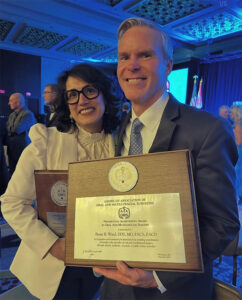
Dillon: I am the first female to be the president of the American Academy of Craniomaxillofacial Surgeons (AACMFS). And more than just being the first female to be president, it’s a massive accomplishment for me to be selected.
It’s a nominee-appointed role to even become an AACMFS member — someone must sponsor you. Your logbook has to show that you’re fulfilling meaningful, hospital-based surgery. Not everybody can even be a member, so to be asked to be on the board and then ultimately asked to become the president is a huge honor in my career.
Seminario: Building new partnerships around the world, learning from different cultures, and understanding how health policies are created and implemented at the country level. I’m especially excited to keep connecting research, education, and policy so oral health is recognized as essential to overall health and equity.
Q. What does it mean to be a successful person in science to you?
Dillon: What’s been fundamental to my career has been to make sure that I can do everything possible in my limited capacity to ensure the success and future of our specialty. So, my personal measure of success would be making sure that the future is solid. When I’m long gone, making sure there’s somebody else who has picked up the mantle and carried on my torch, that’s going to be important to me.
Seminario: Knowing that my work contributes to the well-being of others, being part of a strong and supportive team, and building collaborations that turn into lasting friendships around the world. Success, to me, is about impact, shared purpose, and doing meaningful work.