Three transformative facilities redefine preclinical education at the School of Dentistry
Last year the School unveiled three new world-class training spaces that mark a transformative leap in oral health education. Designed to elevate the learning experience for dental, dental hygiene and Regional Initiatives in Dental Education (RIDE) students, these facilities give students modern layouts that foster more efficient, immersive training and incorporate advanced digital technologies for teaching and learning.
The D-165 Simulation Lab, B-170 Access to Education Center and the RIDE program’s Oral Health Training Center in Spokane are more than just new facilities. They represent a strategic investment in the future of clinical practice. By expanding capacity and embracing innovation, the School is not only preparing students to meet the evolving demands of dentistry, but also addressing the state’s urgent need for a larger, highly skilled oral health workforce.
These spaces position the School at the forefront of preclinical dental education and reinforce its commitment to its mission: Advancing Oral Health for All. They became a reality thanks to the generosity of donors, vital funding from the state legislature and federal grants and significant investments from the School and the UW.
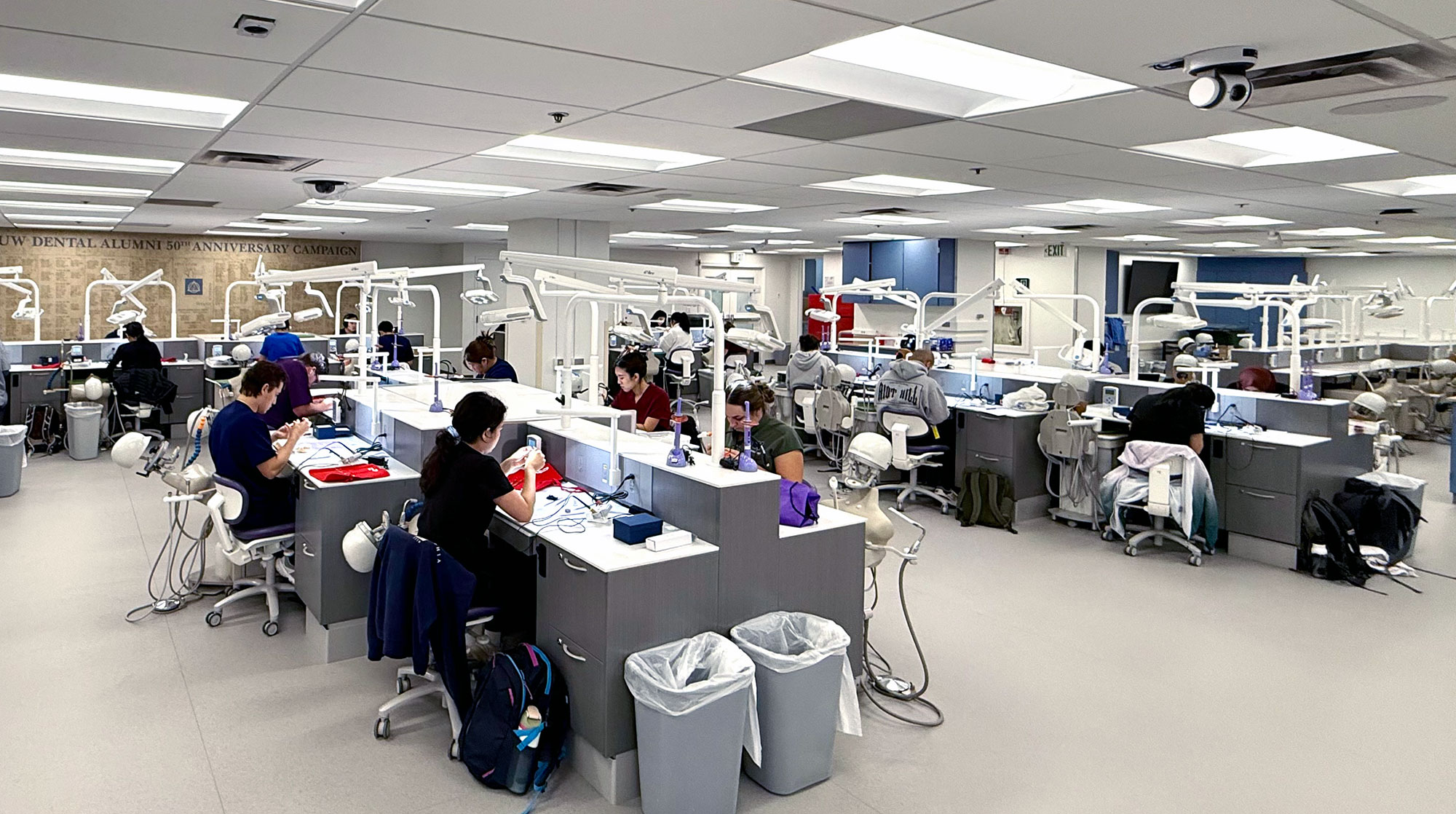
D-165 Simulation Laboratory: Reimagined for the Future of Dentistry
For more than 80 years, the D-165 Simulation Laboratory has been the site of preclinical training, shaping the skills and confidence of thousands of future dentists.
Refreshed only a handful of times over its long history, the lab had not seen a major renovation since 1996, long before digital dentistry, 3D printing and the immersive technologies that define modern dental practice.
In early 2021, under the leadership of former Dean Gary Chiodo, the School launched an ambitious plan to transform this essential teaching space. When Dean André Ritter arrived in 2022, he continued to champion the project alongside Dr. Ricardo Schwedhelm, Associate Dean for Infrastructure and Development, who led its execution.
Reimagined for the Future of Dentistry
The old D-165 design featured pentagonal workstations, which gave the lab a honeycomb-like layout.
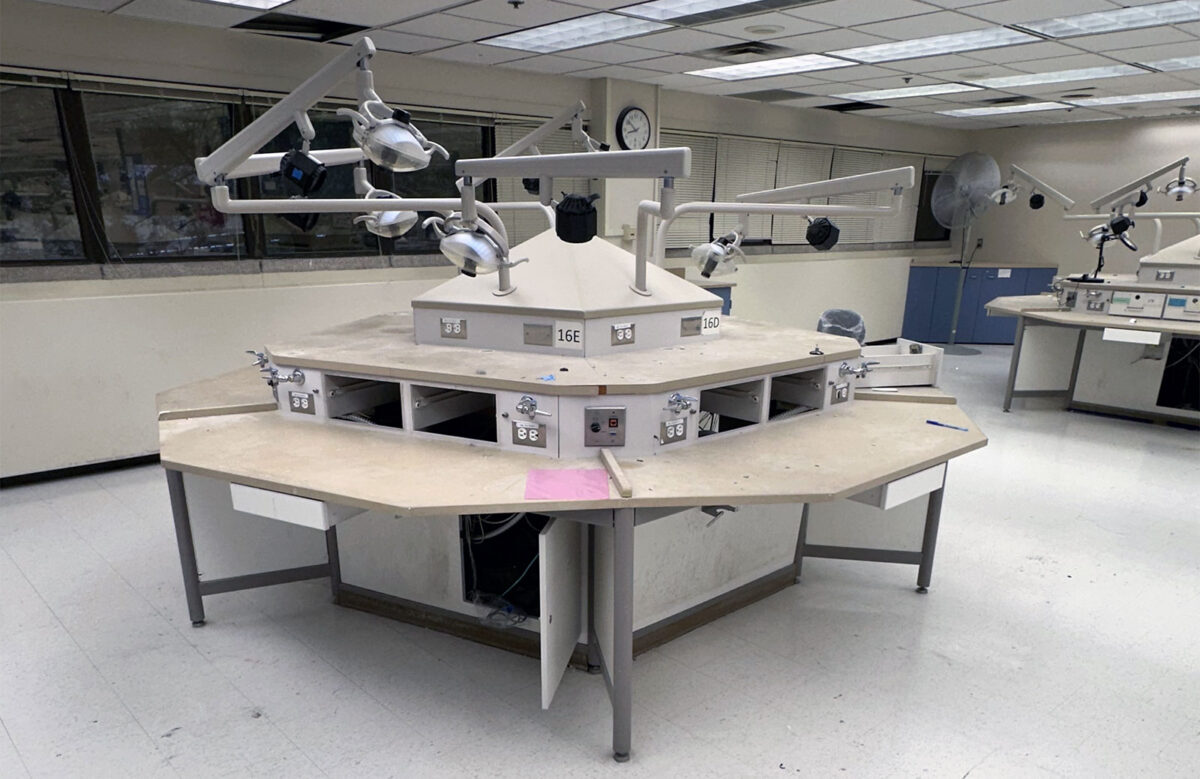
Our Sim Lab is a true clinical simulation environment, and the clinical delivery of oral health care has significantly evolved since the ’90s,” said Dean Ritter. “The main driver for this project was the need to provide our students, faculty and staff with the best possible simulation environment for teaching and learning dentistry in the 21st century.
A Bold Vision
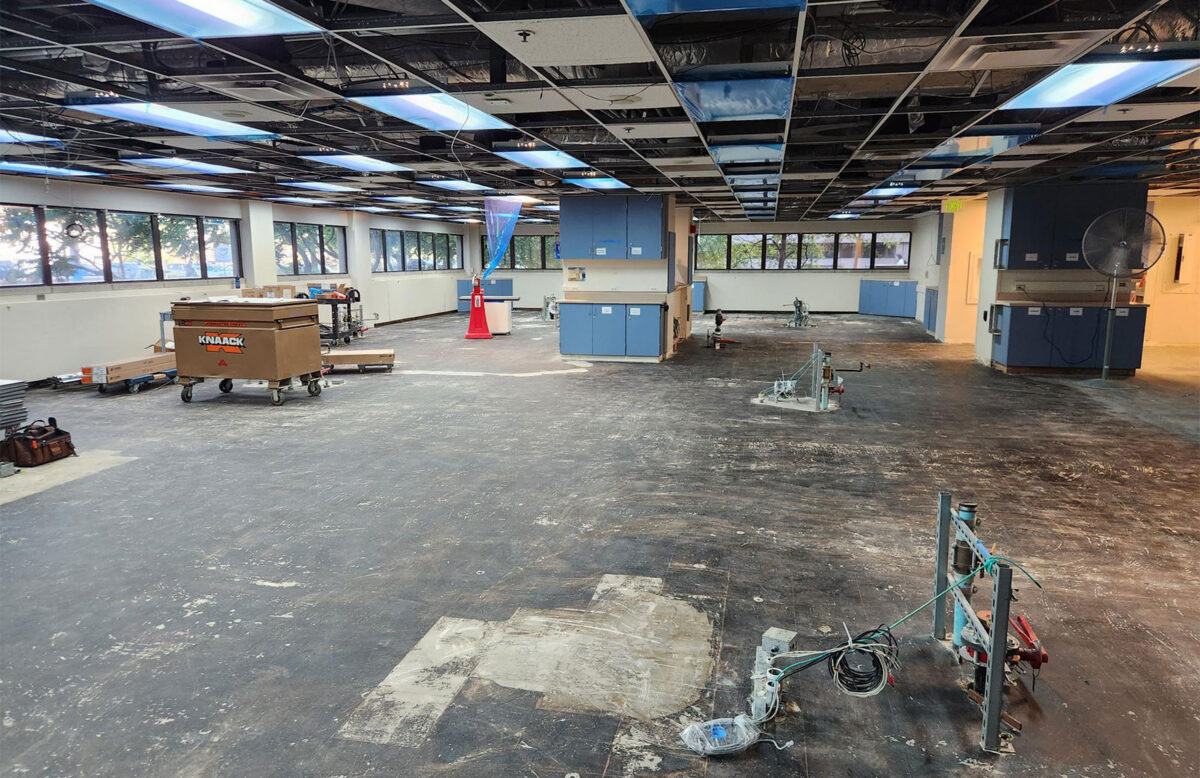
The D-165 lab stripped down during construction
In early 2021, under the leadership of former Dean Gary Chiodo, the School launched an ambitious plan to transform this essential teaching space. When Dean André Ritter arrived in 2022, he continued to champion the project alongside Dr. Ricardo Schwedhelm, Associate Dean for Infrastructure and Development, who led its execution.
The original vision was bold: Expand from 72 to 120 student workstations to accommodate dental and dental hygiene students in one space. But beneath the lab lay a complex web of utilities —electrical, plumbing, compressed air and vacuum lines — that made largescale expansion nearly impossible. After extensive collaboration among architects, engineers and vendors, and the construction of B-170 to house dental hygiene students, the team developed a smart alternative: Reimagine the space around the existing infrastructure.
Using this approach the space was gutted and rebuilt from the ground up over the summer of 2025. It successfully delivered 84 fully equipped workstations just as fall quarter began.
-
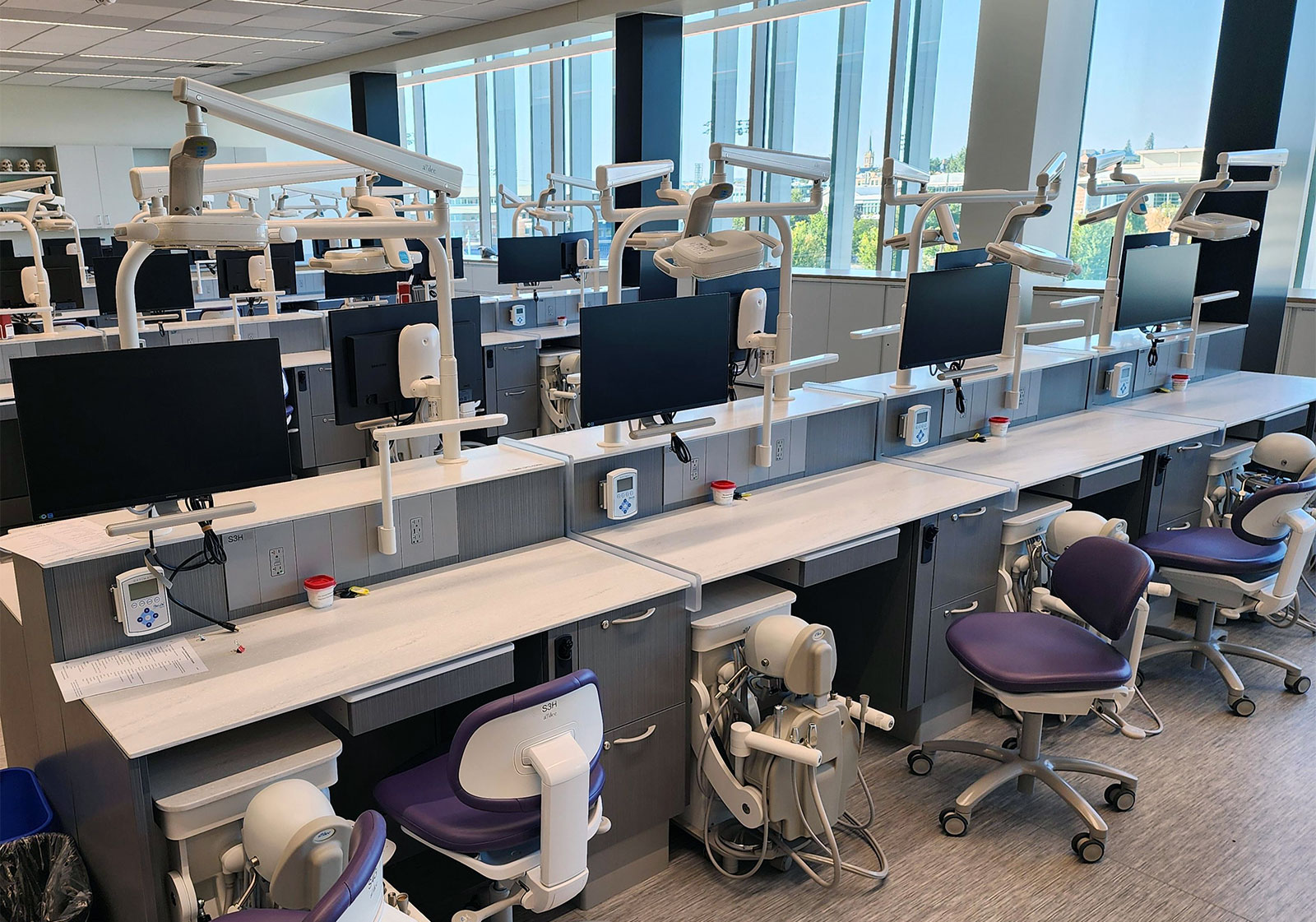
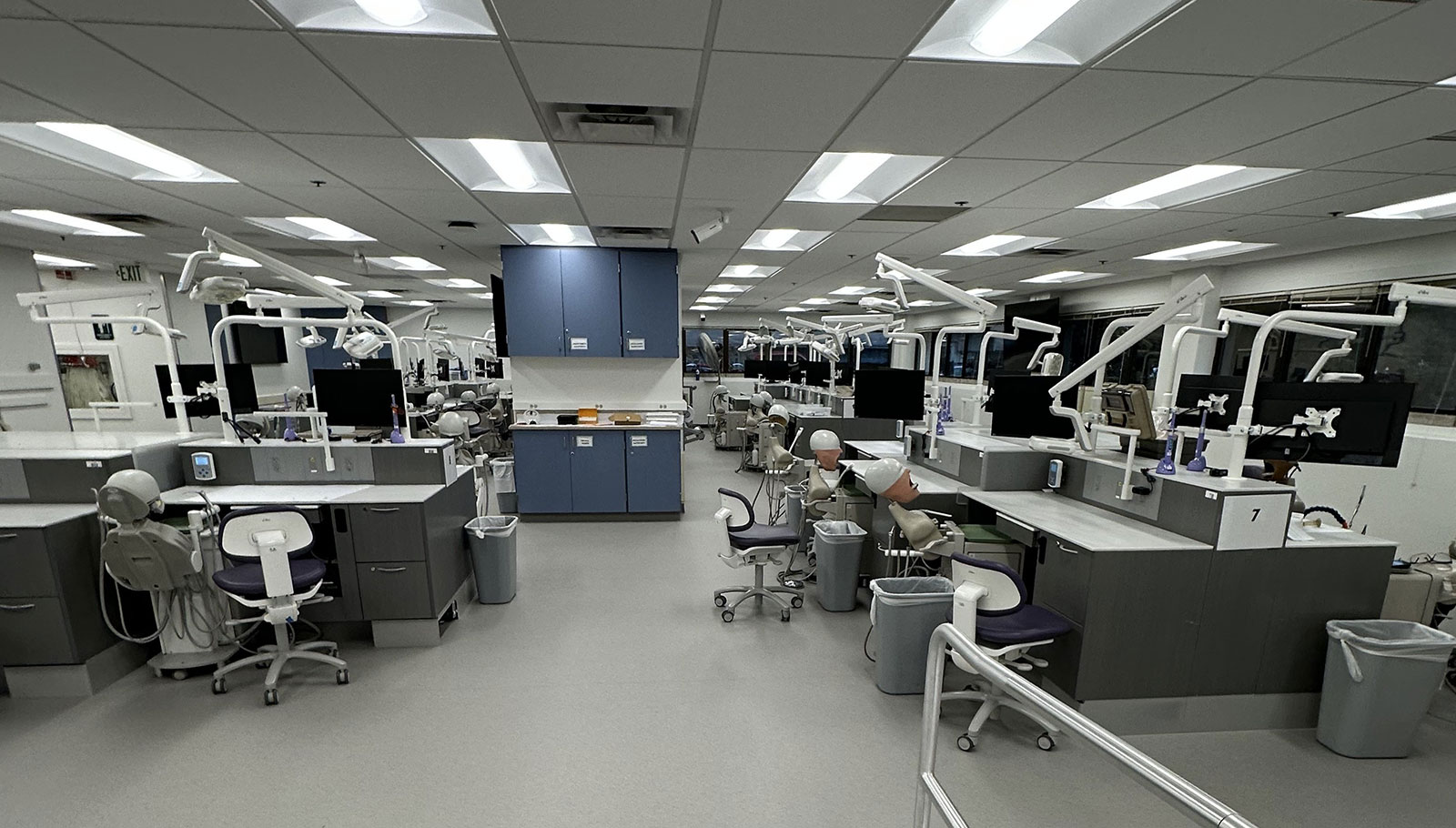 A view of the new layout of the D-165 Sim Lab
A view of the new layout of the D-165 Sim Lab
A view of the new layout of the D-165 Sim Lab.
-
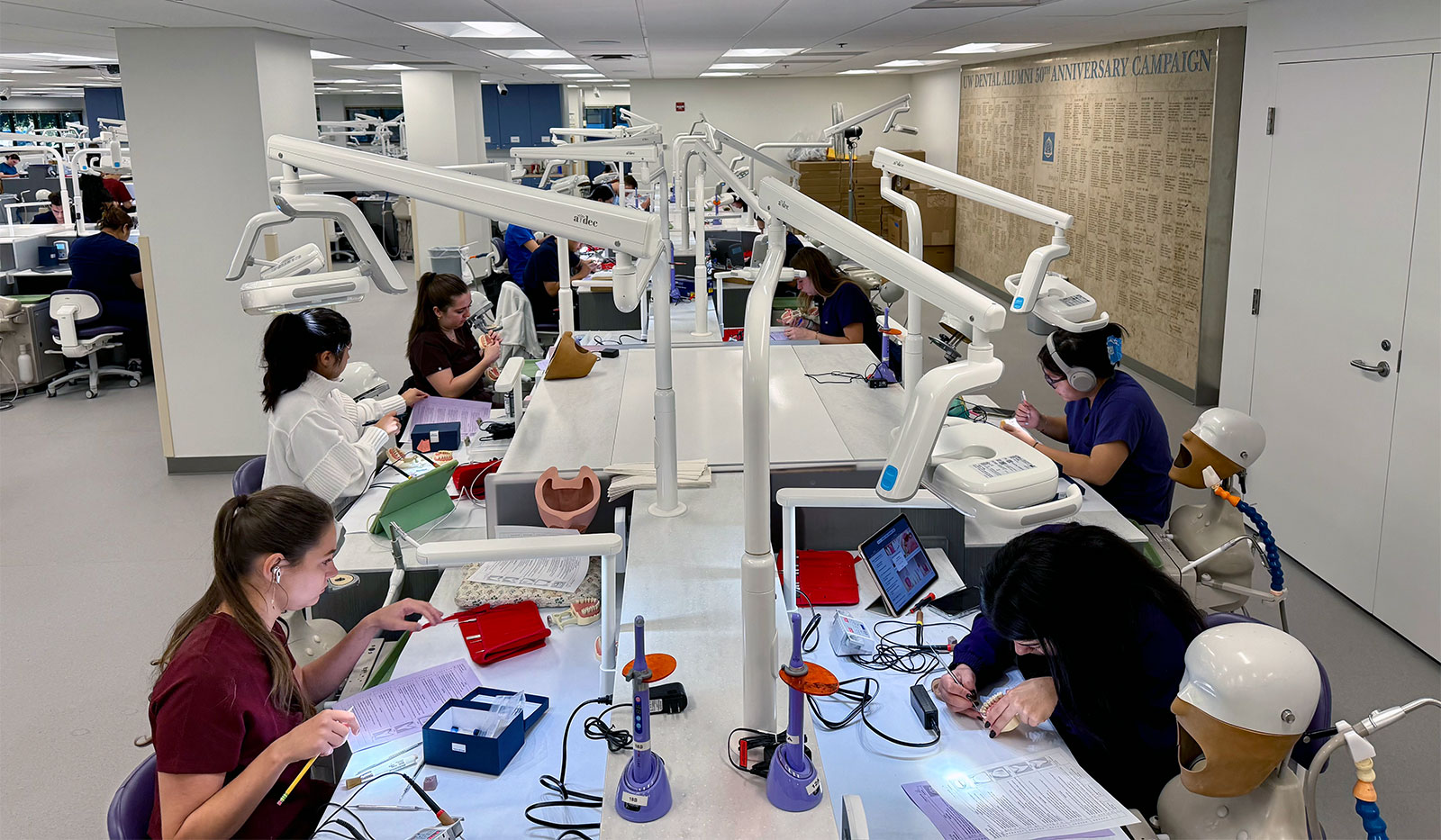 Students praise the new Sim Lab’s layout
Students praise the new Sim Lab’s layout
Students praise the new Sim Lab’s layout and the addition of individual monitors at each workstation, allowing them to view instructional content up close.
The Student Learning Experience
“In addition to much improved lighting, circulation, airflow, flooring and cabinetry, the new space incorporates digital dentistry tools and equipment, so students can simulate the digital workflows they will apply when they begin treating patients in our clinics and beyond,” said Dean Ritter.
“The increased number of workstations and improved layout have made it much easier to accommodate both D1 and D2 students simultaneously,” said second-year student Mark Yang. “The additional space reduces crowding, which helps everyone focus more effectively.”
One of the most impactful upgrades to the new Sim Lab is the addition of individual monitors at each workstation, allowing students to follow faculty demonstrations and instructional videos directly from their seats.
“The new digital stations have been especially helpful,” said Yang. “Being able to view instructional content at each workstation allows for more independent learning and better visualization of techniques.”
The new simulation clinic has greatly enhanced my experience in the lab by providing a more comfortable, spacious and efficient environment to practice in. Each station has been thoroughly equipped with all of the essentials, from a desktop to optimal lighting sources, ensuring that any time spent in the lab is as productive as possible.
Digital Dentistry
The final phase of the renovation will introduce the latest in Digital Dentistry technology. The east wet lab will be transformed into a cutting-edge digital suite, complete with six workbenches, digital design software, 3D printers and milling equipment.
“One of the most exciting aspects of the remodel is the introduction of Digital Dentistry,” said Dr. Schwedhelm. “This new space will empower students to gain hands-on experience with the technologies shaping modern dental practice.”
“The D-165 renovation stands as more than just a construction project. It’s an investment in the next generation of dental professionals and a reflection of the School’s unwavering commitment to innovation, excellence and education,” he said.
RIDE Oral Health Training Center
Applying $2.5 million in funding from the Washington State Legislature and additional federal grants, the RIDE program is expanding dental education and access to care in Washington’s rural and underserved communities.
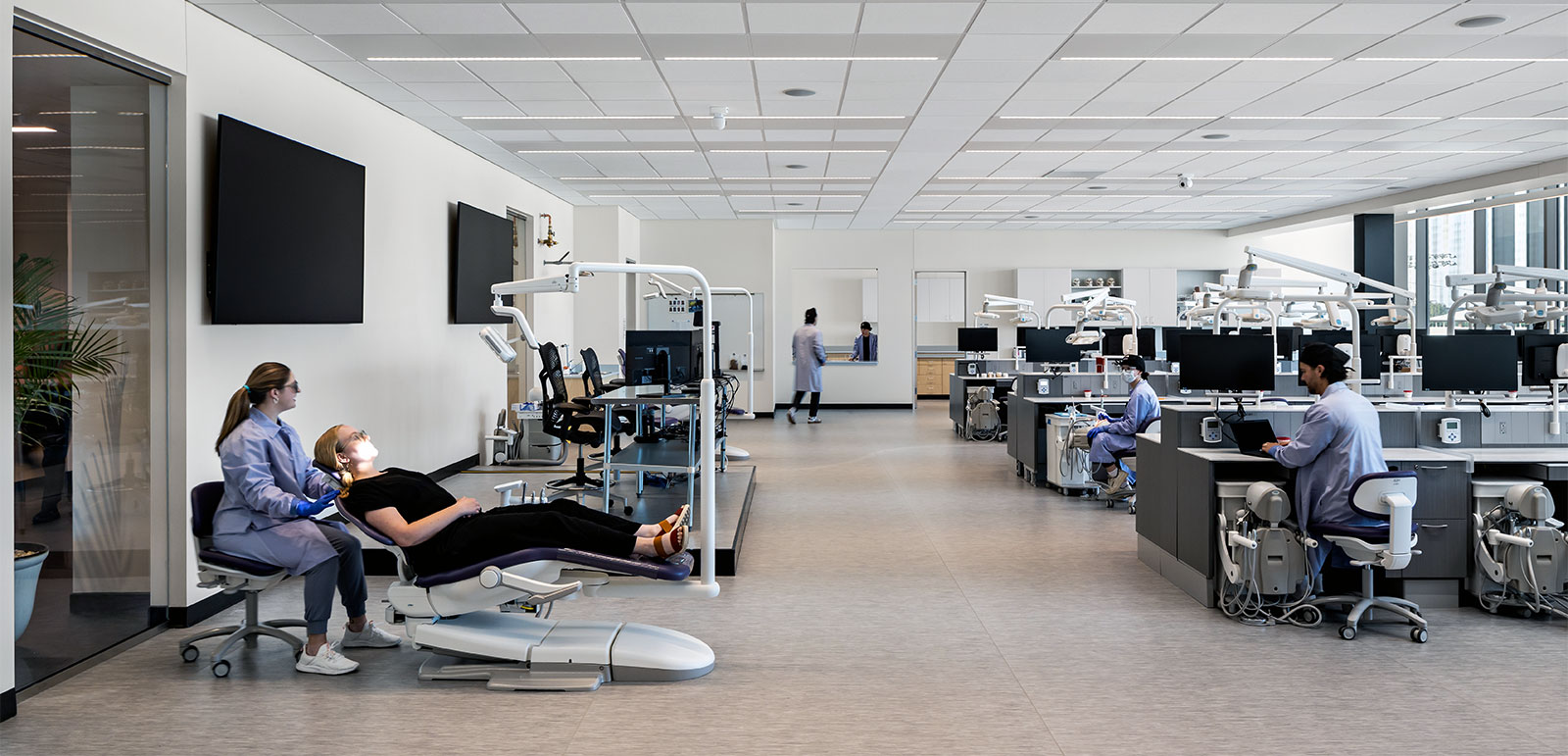
The program now occupies a state-of-the-art, 13,000-square-foot Oral Health Training Center within the UW-Gonzaga University Health Partnership building in Spokane.
With a dental simulation lab, digital dentistry lab, wet lab, dispensary, classrooms, study spaces and administrative offices, this new facility consolidates all of RIDE’s preclinical activities under one roof. Construction began in January 2025 and was completed in September, just in time to welcome students for the fall quarter.
-
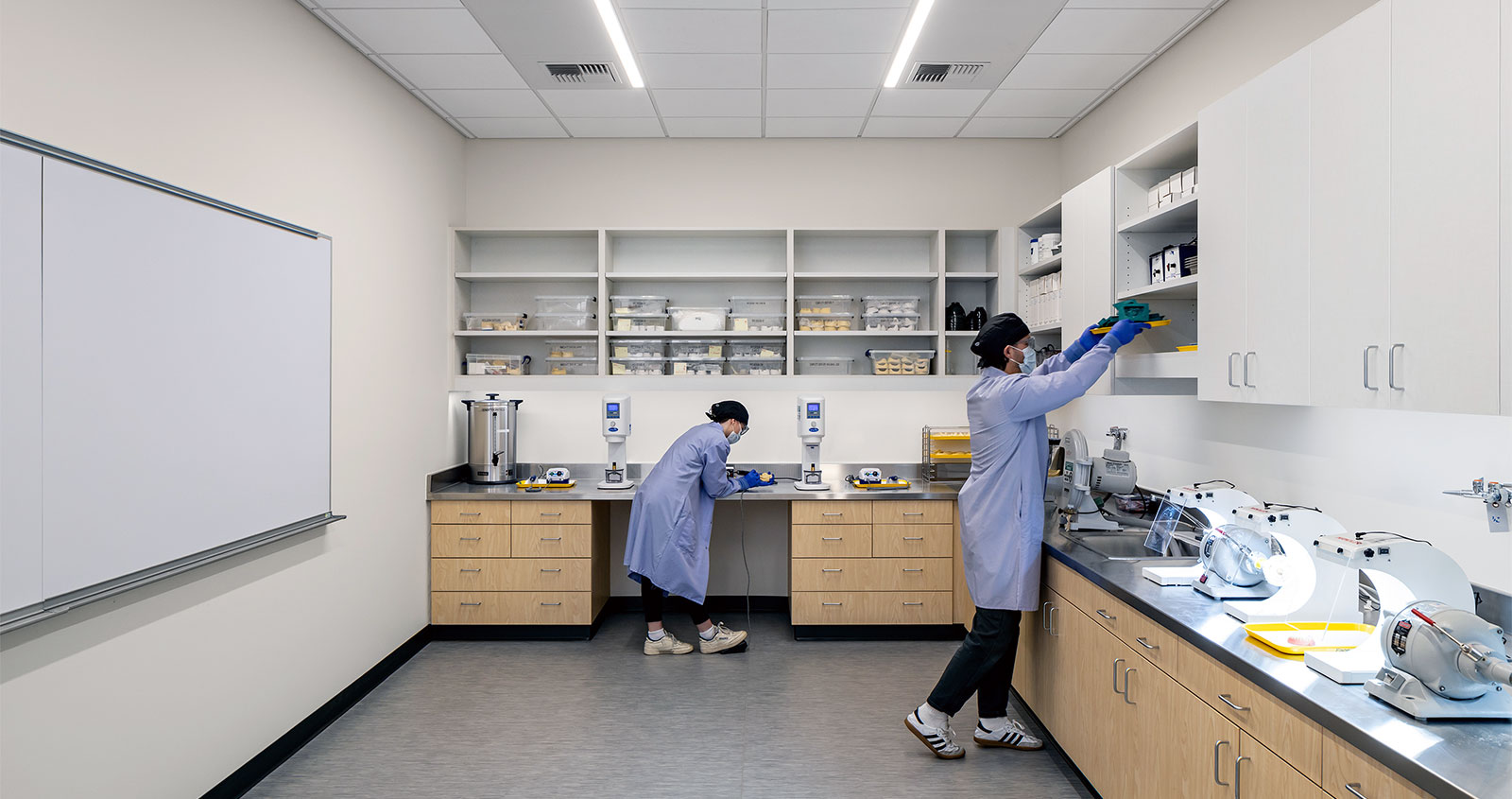 The RIDE facility’s new wet lab
The RIDE facility’s new wet lab
The RIDE facility’s new wet lab.
-
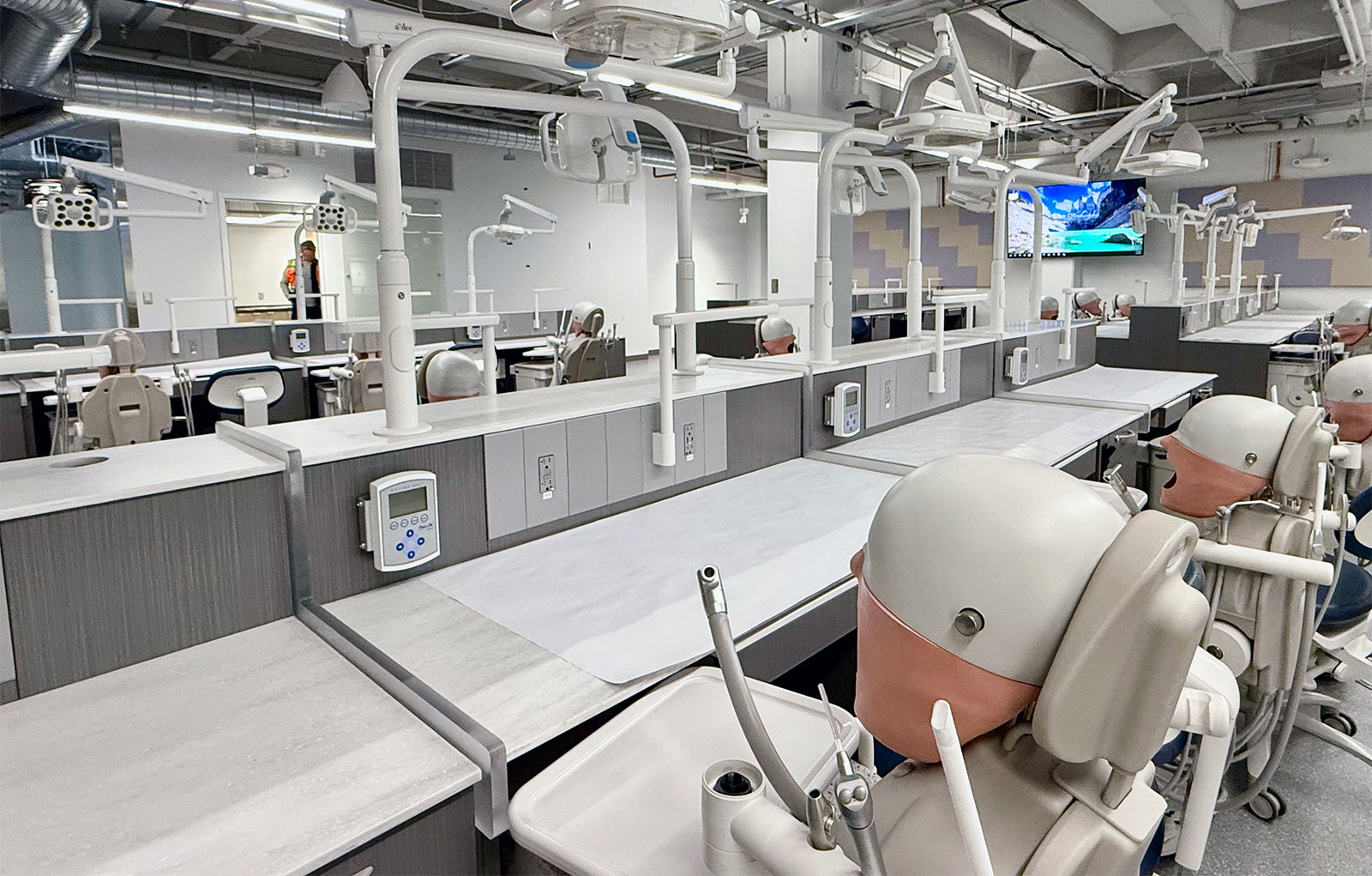
 RIDE Sim Stations
RIDE Sim Stations
RIDE Sim Stations.
“The new facility…has transformed how we learn,” said Garret Lloyd, also a second-year student. “From brand-new simulator mannequins that mimic a patient sitting in a modern dental chair to interactive AV systems that connect us with Seattle, the new facility is highly equipped to enable us to reach our potential.”
With this expansion, RIDE doubled its enrollment capacity to 64 students. And by accommodating two full classes, students can complete their first and second years of dental school in Spokane.
“The new RIDE facilities have greatly enhanced my learning experience by providing resources and an environment that promotes collaborative, effective learning,” said Lloyd. “Having D1s and D2s share the same space has created more opportunities for meaningful peer-to-peer collaboration. This is the first time in the history of the RIDE program that first- and second-year students get to interact in person. This has opened the door for mentorship, teamwork, and a greater sense of community within the RIDE program.”
It’s amazing. I love [the new facility]. All this is much bigger. We have so much more space…which I think will lead to more effective learning. Last year was amazing. This year will be better.
“The new building has made it easier to connect with both my professors and my peers,” said Naw Paw Knyaw, a second-year student. “The open layout and shared work areas create more natural opportunities to stop, ask questions and have meaningful conversations. I find myself interacting with faculty more often, getting quick feedback and learning from their experience in a way that feels effortless.”
Expanding the RIDE program in Spokane “marks a significant milestone for regional oral health education, said Dr. Frank Roberts, Associate Dean and RIDE Program Director. “Our enduring partnerships with Eastern Washington University and the UW-GU Health Partnership are vital to creating this innovative learning environment and we are eager to see the incredible impact our students will have on the community.”
That impact is urgently needed. Thirty-eight of Washington’s 39 counties are federally designated as a complete or partial Dental Health Professional Shortage Area. RIDE’s expansion directly addresses this crisis by preparing more students to work in rural and underserved communities. As it stands, 80% of graduates return to practice in these areas after graduation — a testament to the program’s success.
“I’ve always thought about [practicing in places] where there are more people who need more help instead of in the city centers,” said second-year student Jeremy Percival. “It’s been motivating to learn in such a supportive and modern environment that truly reflects the future of dentistry in Washington’s rural and underserved communities.”
“These investments in the RIDE program give me a deep sense of pride and motivation,” said Lloyd. “It shows that the University of Washington truly believes in RIDE’s mission and in us as the next generation of dentists training to serve in rural and underserved communities.”
B-170 Access to Education Center Simulation Lab
In April, the Access to Education Center (B-170) — a state-of-the-art simulation lab built to expand cohort capacity and elevate preclinical training — opened as the new preclinical home of the Shoreline Community College Dental Hygiene Program (SCCDHP) at the School of Dentistry.
The B-170 Sim Lab is central to the program’s long-term vision for growth and provides a dedicated space for hands-on learning. When SCCDHP transitioned to the UW in 2020, expanding student capacity was a key goal. The program began with just 10 students in its inaugural UW cohort and has since grown to 20 students in the 2026 class. With the new simulation lab, SCCDHP is poised to accommodate up to 30 students per cohort in the near future.
-
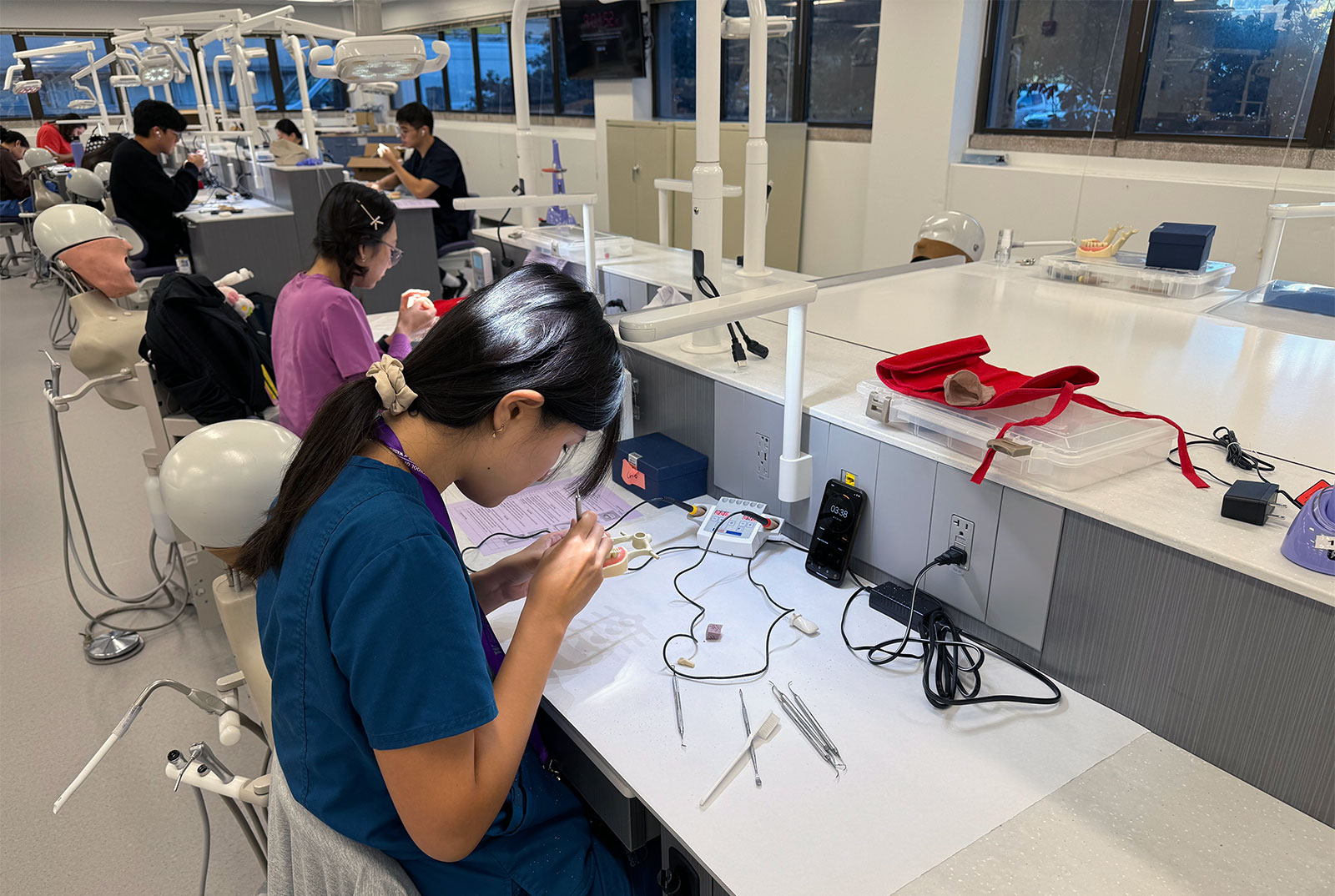
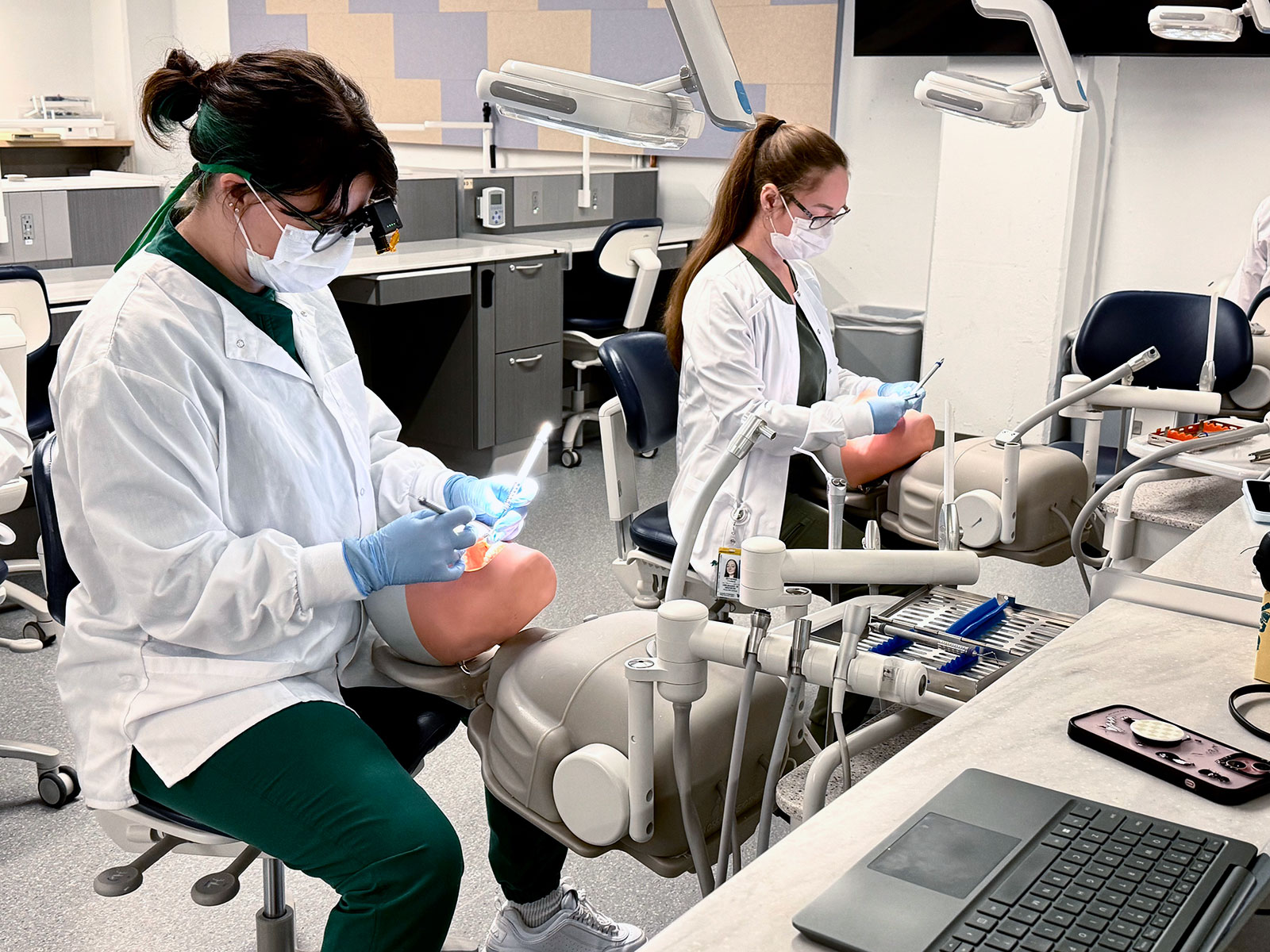 Shoreline students working side-by-side in the B-170 Sim Lab
Shoreline students working side-by-side in the B-170 Sim Lab
Shoreline students working side-by-side in the B-170 Sim Lab.
-
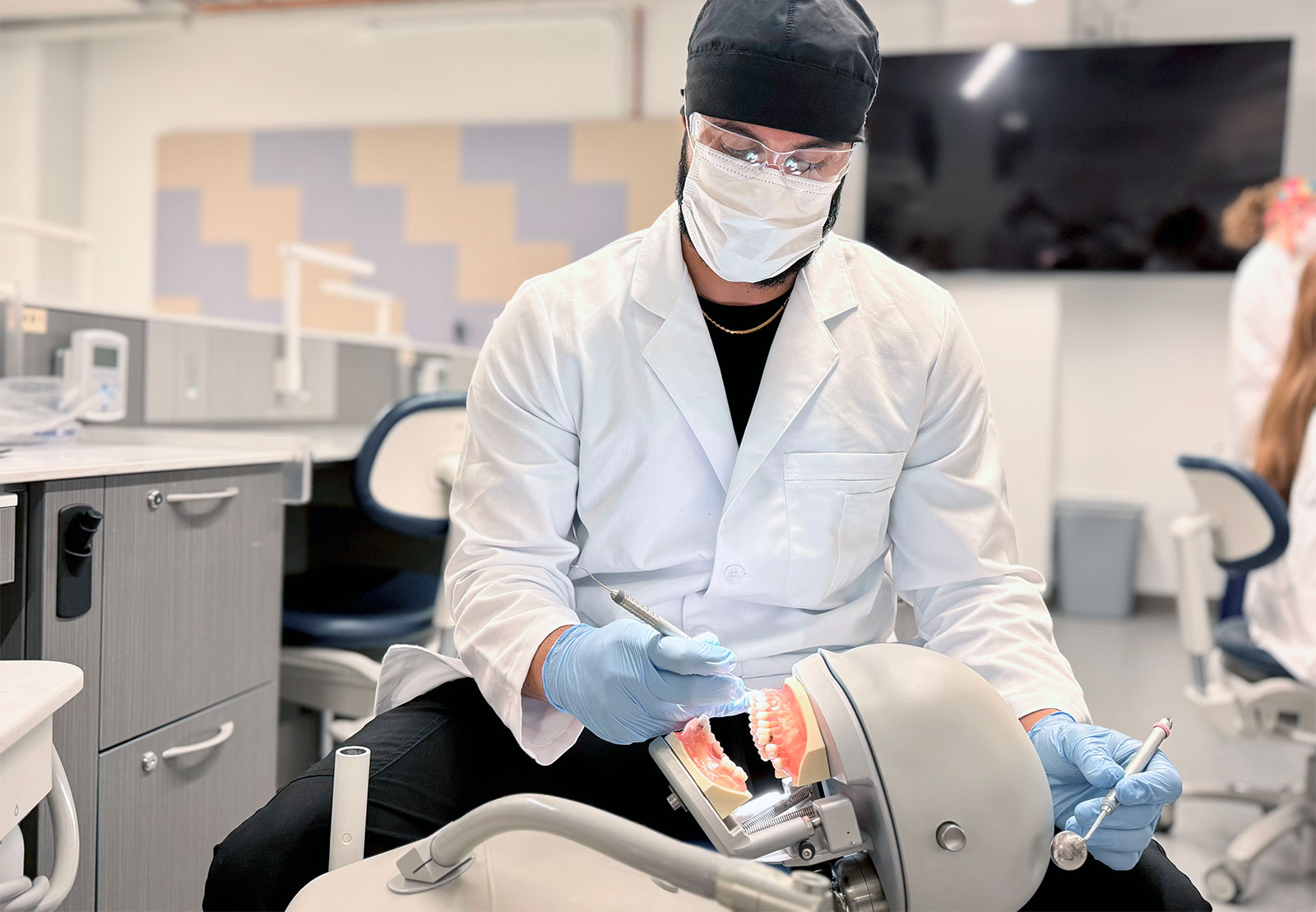 Shoreline student in the B-170 Sim Lab
Shoreline student in the B-170 Sim Lab
“This space is so much more than a simulation lab,” said Shoreline Dental Hygiene Professor Lori Simicich. “The advanced video and audio in the classroom/lab offer students the ability to view an instructor demonstration at the podium using multiple cameras and screens to ensure all students have the best seat in the class. The modern equipment can also record demonstrations for later review.”
Having the Access to Education Center so close to the School’s teaching spaces also allows for seamless collaboration between Shoreline students and predoctoral students.
Operated by Shoreline Community College in partnership with the School, SCCDHP offers students access to world-class facilities and collaborative learning opportunities.
Our Sim Lab’s 20 individual workstations offer an ideal atmosphere for focused practice. The spacious layout also encourages small group collaboration and peer learning.
Dental Hygiene Education at the UW
The opening of B-170 builds on a long-standing tradition of dental hygiene education at the UW. It began in 1950 under the leadership of Dr. Esther Wilkins, a pioneering figure widely regarded as the godmother of modern dental hygiene. Her landmark textbook, Clinical Practice of the Dental Hygienist, first published in 1959, remains a foundational resource and is now in its 13th edition.
Dr. Wilkins established a four-year dental hygiene program and a degree completion track at the School. She was succeeded in 1961 by Dr. Martha Fales, who led the program until 1986 and was known for her advocacy on public health issues. Although the undergraduate program was discontinued in 1983, the School continues to offer master’s and doctoral degrees in dental hygiene.
Given this legacy, integrating Shoreline’s undergraduate dental hygiene program into the School was a natural evolution.
“This new space isn’t just great for students, it’s welcome news for our state,“ said Dr. Honey. “Demand for hygienists outpaces the supply nationwide, and we are proud to be a part of the solution – now we can train even more skilled professionals to enter the workforce and improve access to this vital health care.”
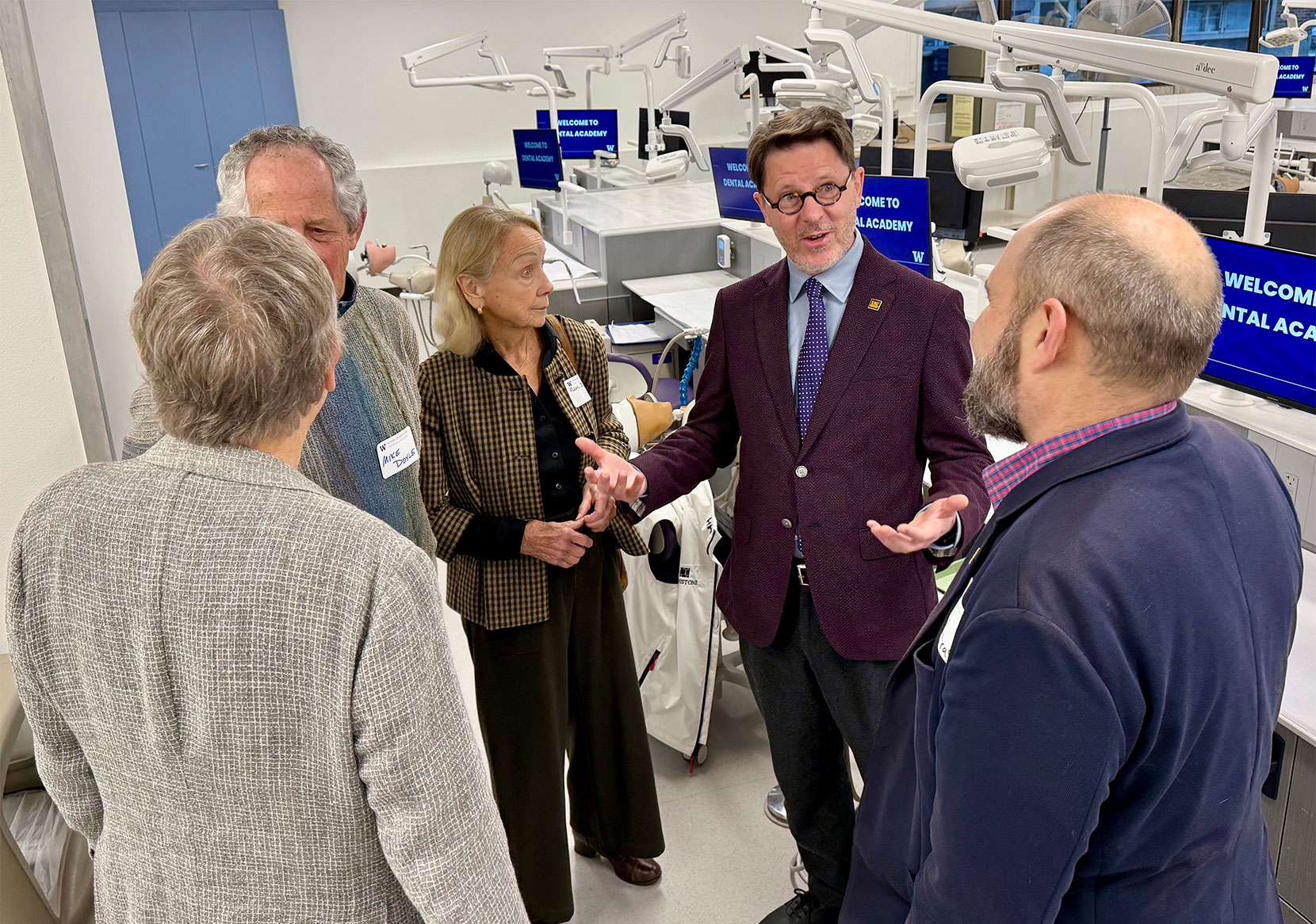
Dean Ritter leads the open house in Seattle.
Open Houses
On Saturday, Jan. 31, the UW School of Dentistry hosted an open house for the community to explore the new clinical spaces and labs that were built on the Seattle campus.
Over 200 alumni and friends stopped by to walk around, chat and check out the shining new spaces, all of which are a product of tremendous hard work and dedication from those who built, led and funded the projects.
Newly appointed Director of Digital Dentistry, Dr. Alireza Sadr, showcased some of the new technologies that the School now has.
In November, the University of Washington Provost and Executive Vice President for Academic Affairs, Tricia Serio, was one of over 130 people who attended the RIDE open house and ribbon-cutting ceremony. Serio told The Spokesman-Review she was “just really excited to have this new facility available for students and everything it represents.”